How Much Flower Was Exported From June to August: Numbers
Today, the regular session of the Government of Armenia was held, chaired by Prime Minister Nikol Pashinyan.
In connection with the necessity to continue support for the export of certain products from greenhouse production, the Government has adopted a decision to provide reimbursements for the exported products in September.
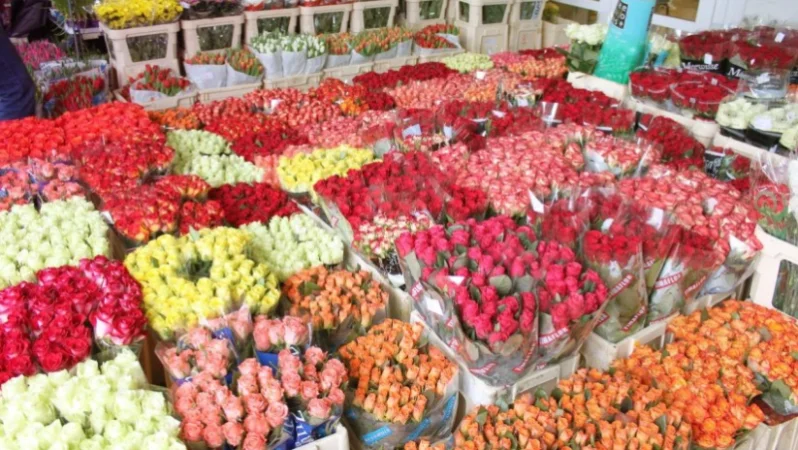
According to the operational information provided by the State Agriculture and Food Safety Inspectorate (SAFSI), from June to August, approximately 4506 tons of peppers, 4041 tons of tomatoes, 0.3 tons of eggplants, 408.6 tons of strawberries, about 10 million flowers, and 102.7 tons of flowers were exported. In August alone, around 2737 tons of peppers, 2888 tons of tomatoes, 0.3 tons of eggplants, 146 tons of strawberries, around 3.5 million flowers, and 36 tons of flowers were exported.
The geography of exports has expanded during these months, with flowers exported to 28 countries, fruits to 24, and vegetables to 16 countries. Given that active negotiations are being conducted by operators towards exporting to other markets, further increases in export volumes are expected shortly. During these negotiations, the price offers are also based on the amount of reimbursement provided, making it appropriate to offer reimbursement for the month of September as well.
Within the framework of this initiative, the reimbursement amount for exporting flowers will be set at 50 drams per piece for any country. Analysis of the export dynamics shows that the expected export volumes for September 2026 will be about 200 tons of strawberries, approximately 3850 tons of vegetables, and around 5.2 million flowers.
The decision proposes that throughout September, exporters of specific greenhouse products will receive reimbursements as follows:
- 770 AMD per kilogram of strawberries,
- 275 AMD per kilogram of tomatoes,
- 400 AMD per kilogram of cherry tomatoes,
- 400 AMD per kilogram of peppers,
- 500 AMD per kilogram of Palermo peppers,
- 200 AMD per kilogram of eggplants,
- 50 AMD per piece of flowers.
Additionally, another decision will ensure the provision of reimbursement for the export of fresh fruit and certain types of food and beverages for processing through purchases intended for export and processing in September 2026.
According to operational information provided by the SAFSI, from June to August 2026, around 3685 tons of cherries, 795 tons of plums, 4175 tons of peaches or nectarines, 430 tons of apples, 120 tons of grapes, 142 tons of figs, raspberries, and blackberries were exported. In August alone, about 770 tons of cherries, 375 tons of plums, 2650 tons of peaches or nectarines, 389 tons of apples, 120 tons of grapes, and 94 tons of figs, raspberries, and blackberries were exported.
The geography of exports has expanded with fruits exported to 24 countries. According to operational information provided by the State Revenue Committee (SRC), from June to August 2026, about 310 tons of tomato paste, 634 thousand liters of bottled grape wine, 818 thousand liters of bottled fruit wines, 3121 thousand absolute liters of bottled Armenian brandy, 2674 thousand liters of bottled natural mineral water, 157 tons of dried fruits or vegetables, 73 tons of mula fish and 80 tons of issikan fish have been exported. According to operational results submitted by processing organizations, as of September 1, 2026, around 4600 tons of peaches and about 50 tons of figs have been purchased for processing.
Taking into account that operators have conducted vigorous negotiations towards exporting to other markets, future increases in export volumes are anticipated, and price offers during negotiations are also made considering the reimbursements provided, it is deemed appropriate to extend reimbursement for the month of September.
In the framework of the initiative, cherries, raspberries, blackberries, and honeysuckle have been removed from the list of reimbursable exported products. Additionally, China has been added to the list of countries for exporting bottled mineral water. The reimbursement provision for peaches and figs purchased for processing is planned to continue until October 1.
Based on the forecasts from exporting operators, the anticipated export volumes for September within the initiative are approximately 11600 tons of fruits and berries, about 100 tons of tomato paste, around 1.0 million liters of mineral water, about 200 thousand liters of bottled wine, about 210 thousand liters of fruit wines, 1.0 million absolute liters of bottled Armenian brandy, 100 tons of dried fruits or vegetables, and 240 tons of issikan and mula fish. The anticipated volume of fruit purchased for processing is estimated at around 4200 tons.
Regarding the decision, Pashinyan noted that Armenia is starting to be recognized as a producer of high-quality dried fruits. "Besides the dried fruits we have envisioned, we now have dry fruit products, and I continuously hear from different places that there is interest. This is an intriguing direction, especially given that due to the issues arising this year, we have promoted additional purchases, and with dried fruits, there is more flexibility regarding storage deadlines. We must pay attention to this nuance because there will be greater and global demand during the corresponding seasons," the Prime Minister stated.
Pashinyan also mentioned that efforts should be made with producers of canned fruits and vegetables and jams. "When the fresh fruit and vegetable season ends, we should already implement support programs for exporting dried fruits and preserves. Programs should guide us on how we are solving the problem in different directions,” he said.
The head of the country emphasized that diversifying export markets should become a strategy for the Armenian Government: "I believe that even if all issues within the EAEU are resolved, diversification should become our strategy, regardless of everything. We should not deviate from this direction. But at this point, we must note with satisfaction that, of course, the issue has been present and continues to exist, but on the other hand, we see that this issue is being managed thanks to the state and private efforts. And certainly, our dear tourists play a significant role here, as their influx provides another dimension of solutions to this problem, because they would have to buy and consume that product in supermarkets or markets in various countries, but they come to the Republic of Armenia and purchase and consume it. By the way, the future development and expansion of tourism from Yerevan to the regions are very important for us to address these issues," he pointed out.
Նմանատիպ հոդվածներ
Iran Calls to Remove Transit Barriers at the Border with Armenia
Iran has called to eliminate trade and transit obstacles at the Norduz border terminal with Armenia, according to IRNA....

Restrictions on Armenian Agricultural Products Representing 'Sanctions' are Manipulation, Galuzin Says
In an interview with RIA Novosti, Russia's Deputy Foreign Minister Mikhail Galuzin stated that the declarations regardin...

I Don't Care Who the Director of Haypost Is, Explain the Spending of Billions: Ioannissyan
We are a very interesting society. No one cares that Haypost operates with billions of drams in losses, and that money c...

It's Hard, But We've Almost Reached Last Year's Levels: Papoyan on Export Volumes
It's hard, but we've almost reached last year's export volumes. This was stated by Minister of Economy Gevorg Papoyan on...
Ավելին Economy բաժնից

Trump Announces Restoration of Oil Transit Through Hormuz

Armenia Secures New Loan of 80 Million Euros
Government to Provide New Compensation to Exporters