The Old System is Being Dismantled, a New Oligarchy is Forming: Suren Surenyants
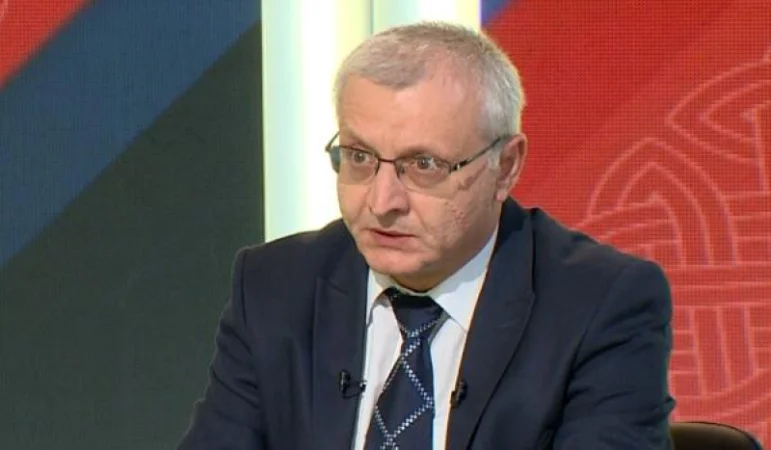
Repressions are leading to a new oligarchy. This is the conclusion drawn by political scientist Suren Surenyants regarding the systemic transformation in Armenia.
“The ongoing repressions in Armenia have several layers, none of which are, in essence, related to the establishment of justice or legality. If the aim were to strengthen the rule of law, the law enforcement system would operate not selectively and politically expediently, but universally, predictably, and under equal rules.”
The first and most discussed explanation for the repressions is domestic political motives—political revenge. Through criminal prosecution, forceful pressure, and administrative levers, the authorities are attempting to weaken or neutralize political, economic, and social centers that are undesirable for them.
However, explaining what is happening solely through this logic would be overly simplistic. The elections have concluded, the immediate issue of reproducing power has been resolved, yet the pressures not only continue but are taking on a more systemic nature.
Therefore, it is essential to understand what new issues are being addressed through repressive policies in post-election Armenia. Here, a second layer emerges—the factor of external obligations. Very sensitive issues are likely to appear on the government’s agenda soon, such as the adoption of a new Constitution, the return of enclaves, and the implementation of new agreements within the framework of Armenian-Azerbaijani relations. These are decisions that could provoke significant public and political resistance.
In this context, at least it is worth discussing the hypothesis that Nikol Pashinyan is trying to preemptively weaken organized centers of potential resistance. Repression becomes a means to create a favorable environment for future political processes. In other words, the targets may not only be today’s political opponents but also potential centers of resistance for tomorrow.
However, even these two explanations do not fully disclose the depth of what is occurring. There is a third factor that may have the most systemic and long-term consequences—the change in Armenia's strategic course. Armenian-Russian strategic relations have not been limited in three decades solely to intergovernmental ties. A broad system of political, economic, security, business, cultural, and social relations has formed around them, complete with its institutions, centers of influence, connections, and interests.
Today, that very environment is being systematically dismantled. A change in strategic course also implies a restructuring of the country’s internal structure. If the authorities are taking Armenia out of the former geopolitical system, it is logical that they will also attempt to weaken or eliminate the political, economic, and social centers that were formed and gained influence within that system.
From this perspective, repressions take on structural significance. The targets are not only political dissenters but also independent centers of resources, influence, and social connections that are not controlled by the authorities and could obstruct internal and external reconfiguration of the country.
However, the dismantling of the old system inevitably raises another question: what will be created in its place? Political and economic influence does not tolerate a vacuum. If the old centers are being weakened or destroyed, new ones will form in their place. Here, the prospect of a new oligarchy takes shape—new privileged businesses, new owners, new external connections, and new mechanisms of dependency on the government.
Thus, the processes occurring in Armenia are much deeper and broader. On one hand, the government neutralizes political competitors, while on the other, it is weakening those centers that may resist possible decisions regarding a new Constitution, enclaves, or external agreements. Yet, on the third, most profound level, it is reshaping the country’s political and economic system to align it with Armenia’s new strategic orientation. These three layers complement one another. If this logic is correct, the real purpose of the ongoing repressions is much deeper than merely depriving individuals of freedom or silencing political opponents. It concerns the reconfiguration of the balance of power, centers of influence, economic ownership, and ultimately, the political and geopolitical structure of the country.
The main question is what kind of Armenia is being built through these repressions and whose interests the emerging new system will serve,” writes political scientist Suren Surenyants.
Նմանատիպ հոդվածներ
Searches at the Homes of Robert and Levon Kocharian: Details from the Anti-Corruption Committee
Searches are being conducted at the homes of Robert and Levon Kocharian. This was reported by MP Mesrop Manukyan from th...
Zelensky's Controversial Confession: He Deceived Trump on Russia's Issues
Ukrainian President Volodymyr Zelensky has confessed that he deceived U.S. President Donald Trump regarding the possibil...
Armenia to Host International Conference on Climate Change
An international conference focused on climate change solutions is set to take place in Armenia next month, bringing tog...
New Program Developed by the Government of Armenia: Key Directions Revealed
According to Article 151 of the Constitution of the Republic of Armenia, following the formation of the Government, the...
Ավելին Politics բաժնից

The housing program for displaced persons from Artsakh continues: announcement

Levon Kocharyan Discusses His Father's Health Condition
Ratcliffe Secretly Arrives in Moscow: Important Request Conveyed to Ukraine Amid Visit