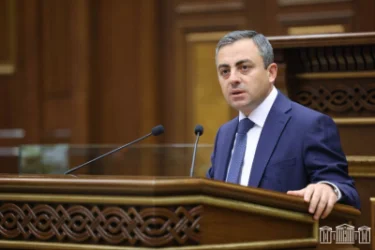
Relations Between Russia and Armenia Deteriorate: What You Need to Know - Izvestia
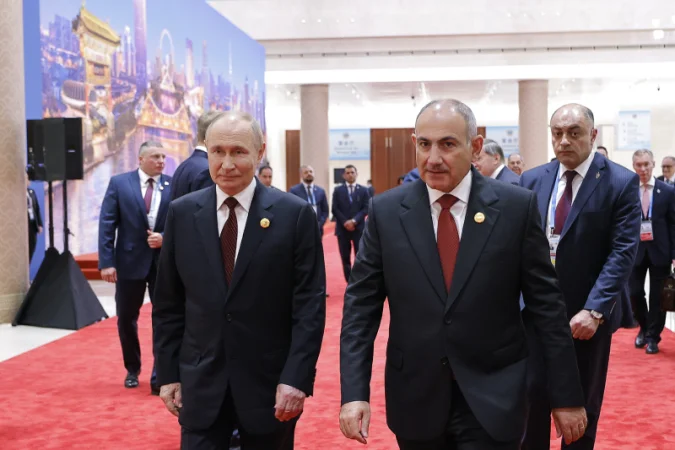
Relations between Moscow and Yerevan continue to remain under pressure following Armenian Prime Minister Nikol Pashinyan's statement regarding the course of rapprochement with the European Union (EU). The head of the Armenian government announced the intention to submit an application for EU membership and the willingness to completely leave the CSTO.
Amid this background, issues concerning railway concessions, the Metsamor Nuclear Power Plant, and agricultural exports remain unresolved. The developments in the relations between the two countries over recent months have been touched upon by Izvestia.
On August 24, one and a half months after parliamentary elections, Pashinyan presented the government's activity program for 2026-2031 in the National Assembly and announced the imminent submission of an EU membership application. According to the PM, this process will require significant work from the government. He stressed that following the application submission, receiving a response from the EU, and drafting a roadmap, a referendum will be held on joining the EU or continuing membership in the Eurasian Economic Union (EAEU). Pashinyan added that the leaders of other EAEU countries had previously stated the necessity of holding such a referendum.
The government head also expressed his views on the issue of membership in the Collective Security Treaty Organization (CSTO). Armenia has "suspended" its participation in the military alliance, set to last until 2024, but formally remains one of the six members. The Prime Minister stated that the government program does not mention the CSTO, and there are no plans to return to the organization. Moreover, Pashinyan expressed that he would be "happy" if Armenia were removed from the CSTO, which could be triggered by Yerevan's debt in relation to organization fees.
Railway Concession
Separately, Pashinyan addressed the railway concession, which is one of the points of contention between Russia and Armenia. Since 2008, Armenia’s entire railway network has been under the management of South Caucasian Railways, which is 100% owned by Russian Railways (RZhD), while the infrastructure remains property of Armenia. Pashinyan described the fact that the railway is under Russian management as an obstacle to its integration into the international network.
Pashinyan urged Russia to sell the RZhD concession to a third party, one that would be friendly to both Moscow and Yerevan. In this way, he seeks to attract investors who would resume operations on the Yeraskh-Akhurian line, which runs through all of Armenia, from the border point with Turkey to the Azerbaijani exclave Nakhchivan. This route could become a vital transport artery for the entire South Caucasus. However, its significance is at risk as Turkey is simultaneously constructing a road to Nakhchivan, circumventing Armenia, which would draw potential cargo flows away.
Russia does not agree to the sale of the concession, which is effective until 2038. RZhD’s CEO Oleg Belozyorov stated that if the agreement is amended or dissolved, Armenia would have to compensate nearly $400 million, which Russia invested in Armenian railways. Pashinyan also threatened arbitration regarding the operation of the network and suggested that Armenia could seek an additional $2 billion from Russia for road management.
Metsamor Nuclear Power Plant
The situation surrounding the Metsamor Nuclear Power Plant, the only one of its kind in the South Caucasus, also currently affects the relations between Russia and Armenia. It covers up to 30% of Armenia's electricity demand, although its operational life is limited to 2036. The plant has already undergone modernization by Rosatom to extend its operational life.
The Armenian leadership is currently exploring options for the further use of the NPP. According to Pashinyan, the possibility of extending its service life until 2046 is under discussion, but any decision will be made considering the position of the International Atomic Energy Agency (IAEA). Additionally, Armenia will negotiate with foreign partners about the NPP's servicing, not just Rosatom. However, this option would be technically complex and risky due to the characteristics of the Soviet VVER-440 reactor installed there. Foreign partners will also be offered to present a project for a new nuclear power plant.
Agricultural Production
Another point of tension is Armenia's agricultural product exports. At the beginning of summer, Rosselkhoznadzor introduced phased restrictions on nearly all Armenian food supplies, including fruits, vegetables, flowers, alcoholic beverages, fish, and "Jermuk" mineral water, due to violations of phytosanitary and veterinary standards. Since then, the situation has not changed over nearly the past three months, and Armenia has lost up to 90% of its agricultural export realization.
In response to this, the European Union opened its market for Armenian products and allowed imports duty-free, and also promised at least 50 million euros in urgent economic assistance. The Armenian government also launched an exporter support program to make supplies to Europe economically viable.
However, Armenia's reorientation towards the European market encountered serious difficulties, primarily due to the high costs and complexities of transporting perishable goods through Georgia and the Black Sea. European buyers also imposed quite stringent phytosanitary control measures that producers could not comply with. The aquaculture sector expressed dissatisfaction as exports could not be organized due to insufficient support measures.
As a result, exports of vegetables, fruits, and flowers to Europe plummeted compared to last year's figures for Russian exports. In May and June, Armenia sold these products in the European market for just under 370,000 euros, significantly lower than the millions of euros in product labeling between Yerevan and Moscow.
What This Means
If Armenia exits the EAEU, having announced the imminent launch of the EU membership application process, it could face a situation where the price of such reorientation is excessively high. Joining the European Union and starting full-fledged trade relations with it will take years, if not decades. During that entire time, the level of flower and agricultural product exports will be extremely low. The European Union’s support will still depend, as before, on Ukraine, which will receive priority help, including in trade, while Armenia, despite promises, will be helped on a residual basis. Against the backdrop of its deteriorating economic situation, EU capabilities are not limitless, especially since even without Yerevan, nine countries possess candidate status for EU membership. Turkey, for example, has been waiting since 1987. The political benefits the Western-oriented government of Pashinyan will gain and the personal support that will be given to the Prime Minister will cost a decline in the living standards of the country's population.
Նմանատիպ հոդվածներ
Baku Demands Immediate Actions from Russia; Ambassador Summoned to MFA
The Russian ambassador to Azerbaijan, Mikhail Evdokimov, has been summoned to the Ministry of Foreign Affairs. According...
Pashinyan Proposes Discussion on Ban of Anonymous Accounts on Social Media
It is necessary to discuss the possibility of a legislative ban on anonymous accounts on social networks. Armenian Prime...
Erdogan Conveyed Ankara's Message to Trump on Iran Issue
Turkish President Recep Tayyip Erdogan has emphasized the importance of maximizing diplomatic efforts to reduce tensions...
Trump Comments on Defense Agreement Signed Between Turkey, Saudi Arabia, and Pakistan
United States President Donald Trump has expressed his satisfaction regarding the signing of the Joint Defense Agreement...
Ավելին Politics բաժնից
Application Submitted to Detain Sedrak Kocharyan, Son of Robert Kocharyan
Video: Charges Filed Against Kocharyan, Human Rights Defender
The Recent Events Surrounding the Kocharian Family are a Means to Distract Society's Attention: Narek Mantashyan