How Industrial Hemp Cultivation Will Be Implemented in Armenia
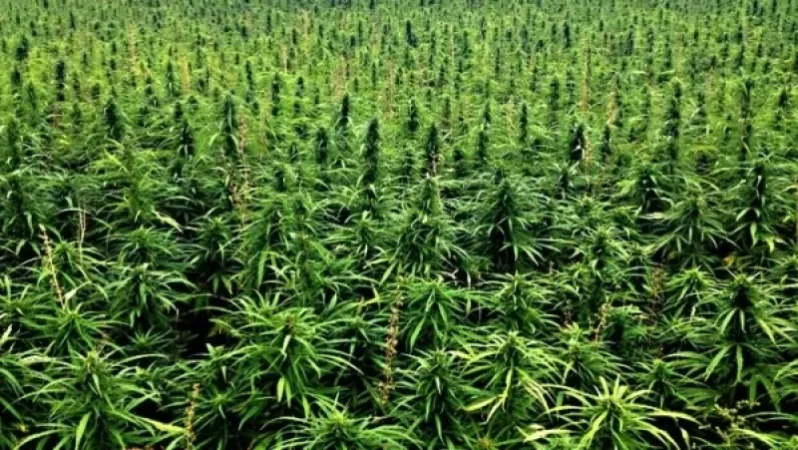
On March 9, a meeting was held at the Ministry of Economy of Armenia to discuss the necessary legal acts for the implementation of hemp cultivation in the Republic of Armenia. The meeting was chaired by Deputy Minister Tigran Gabrielyan.
The working group includes representatives from the offices of Armenia's Deputy Prime Minister Tigran Avinyan, the Ministries of Economy, Health, Territorial Administration and Infrastructure, the National Security Service, the Police, the Food Safety Inspection Body, the State Revenue Committee, and the Armenian National Agrarian University.
The process will be implemented under the Agricultural Sector Development Plan aimed at creating high added value from new crops, approved by the Government of Armenia on February 4, 2021. This initiative aims to significantly increase the effective use of agricultural land.
Welcoming the meeting participants, Tigran Gabrielyan noted that hemp cultivation has been considered in the Ministry since 2017 as a new, high-value crop for producing various industrial raw materials.
Presenting the main phases of the process and the proposed actions, Varsik Martirosyan, Deputy Head of the Agriculture Department of the Ministry of Economy, mentioned that hemp cultivation is permitted in nearly 47 countries worldwide as an agricultural crop. The Ministry of Economy has thoroughly studied international practices of hemp cultivation, as well as the legal acts regulating the field and existing control mechanisms.
According to him, hemp cultivation in Armenia will be strictly regulated and licensed. In the first year of the program's implementation, a scientific and production cultivation of hemp is planned, which will allow selecting varieties suitable for Armenia's climatic conditions with a defined tetrahydrocannabinol content. Under licensed operations, certain companies will be able to engage in hemp cultivation, with preference given to those that will also carry out processing.
During the meeting, the working group discussed various issues regarding ensuring the efficiency of hemp cultivation, conducting laboratory tests, and implementing specific control mechanisms through cooperation between government bodies in relation to the processing of produced hemp.
Hemp provides multiple and waste-free processing, resulting in fiber (textile industry), paper, building materials, food (oil, margarine, food additives), hygiene items (cosmetics), medicines, and other technical products.
Նմանատիպ հոդվածներ
Scheduled Power Outages for Specific Addresses
The Armenian Electric Networks Company has announced that on March 11, planned maintenance work will temporarily interru...
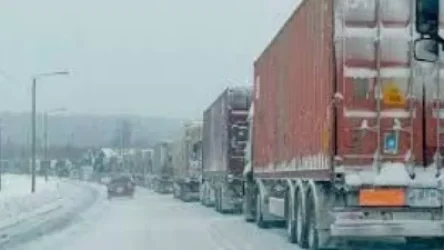
Larsi Road Closed for Trucks
According to information received from the Georgian Ministry of Internal Affairs’ Emergency Management Department and th...
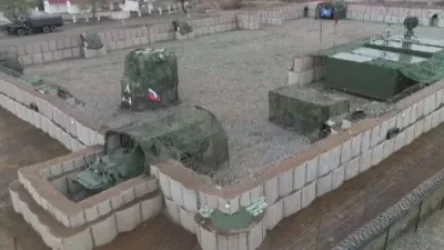
Ninth Block-Module Shelter Built for Russian Peacekeepers in Artsakh
In Artsakh, in the city of Askeran, a new block-module shelter designed to accommodate 60 Russian peacekeepers has been...

Power Outages Scheduled in Specified Addresses
The Electric Networks of Armenia informs that on March 12, power supply will be temporarily suspended at the following a...
Ավելին Other բաժնից

Temperatures Up to +40°C and High Fire Risk: Weather Forecast for Armenia

14:00 News in Brief: Yerevan State University is the Most Demanded University, Malishka's 'Ghost' Still Being Sought, Baku Complains to Moscow

13:00 News Brief: New Crime Trends in Armenia, Decline in Trump's Ratings in the USA