Today, There Are No Armenians in Artsakh: Sharmazanov Blames the Civil Contract Party
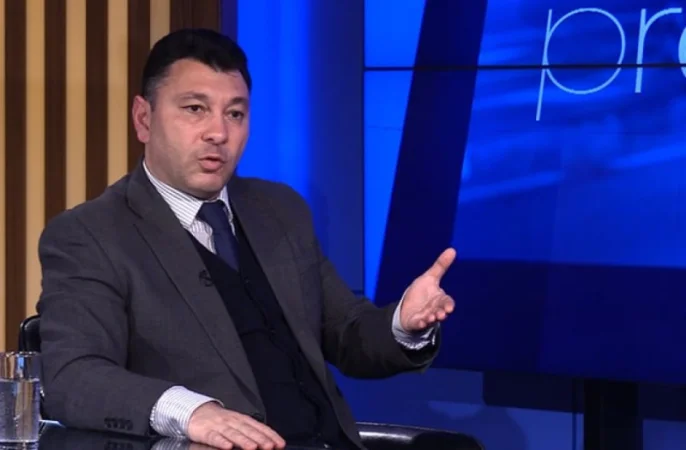
Eduard Sharmazanov, a member of the Republican Party of Armenia (RPA), criticized the Civil Contract Party (CPP) for its inaction regarding the international recognition of the Armenian Genocide, stating that it has led to ethnic cleansing in Artsakh.
“It is no secret that the Civil Contract party has long abandoned considering the international recognition of the Armenian Genocide as a priority in foreign policy. However, I cannot overlook the speech of one of the CPP deputies today, considering it an official position of the ruling party. Firstly, genocide is not just a crime against a particular nation or ethnic group; it is a crime against universal values. This is absolutely condemnable. It is no coincidence that we have a significant chain of international recognition and condemnation not only in the case of the Armenian Genocide but also, for instance, regarding the Holocaust. In other words, advanced humanity must condemn genocides.
Secondly, in the case of the Armenian Genocide, on May 24, 1915, the governments of France, Russia, and Great Britain described the mass murders of Armenians as ‘a crime against humanity and civilization.’ Responding to another thesis of the CPP, that they are not the first to abandon prioritizing the recognition of the Armenian Genocide in foreign policy, as it was not a state priority during President Levon Ter-Petrosyan’s era from 1991-1998, I must point out that there is a significant 'but.' Unlike the regime of Nikol Pashinyan, the first government of the Republic of Armenia under Ter-Petrosyan did not claim that the agenda of international recognition of genocide was a foreign narrative imposed by external centers.
The first president’s government did not question the understanding of why and how the genocide occurred or its causes and did not say, like another CPP deputy, that we still need to discover and publish the names of 1.5 million victims individually. The parallels are incompatible. Yes, during both Ter-Petrosyan's and Nikol Pashinyan's eras, the issue was not a foreign policy priority, but Ter-Petrosyan did not say, like Pashinyan, ‘why did they not talk about the genocide in the 1930s, and why did they only start discussing it in the 1950s?’
The CPP claims that no state has recognized it at Armenia's request and that the recognition of the Armenian Genocide has various reasons, including the Armenian diaspora and the countries’ relations with Turkey. According to them, when this issue became a priority in political discourse, it brought no benefit. The main goal of condemning and recognizing the genocide is to condemn past atrocities to prevent new crimes from recurring. Both in the Pan-Armenian declaration published in January 2015 and throughout President Serge Sargsyan’s administration, the best solution for prevention was condemnation because if you do not condemn past crimes, there is a risk of new crimes and atrocities.
When Nikol Pashinyan and his government changed their course in international condemnation and recognition of the Armenian Genocide after 2020, in 2023 we witnessed a new atrocity: the ethnic cleansing of the Armenian population in Artsakh. The CPP asks what the end result of the recognition of the Armenian Genocide has been. The end result of international recognition is the condemnation of that crime by the international community, just like in the case of the Holocaust, to prevent new atrocities from recurring. This is the clear goal. And the CPP did the exact opposite. As a result, we witnessed how this led to Azerbaijan’s new genocidal policies. The CPP's silence and inaction also led to the situation where today there are no Armenians in Artsakh.
Serge Sargsyan and the RPA had clear red lines. Azerbaijan and Turkey are threats to us, and we moved our agenda forward. In 2015, influential figures of the world, including Pope Francis, Putin, and Hollande, were in Yerevan, with over 100 delegations. The presidents of the permanent member states of the UN Security Council, France and Russia, condemned the Armenian Genocide organized and carried out by the Ottoman Turkey at Tsitsernakaberd. Isn’t that an achievement? Or is it an achievement for the CPP to recognize Artsakh as part of Azerbaijan, to ethnically cleanse Artsakh, and to change the Constitution of Armenia at Azerbaijan’s demand?
Not to mention that the current regime considers itself ‘a bastion of democracy.’ But how can a bastion of democracy not prioritize condemning the atrocities committed against humanity and the Armenian nation? After all, the foundation of democracy is human rights, and the main goal of the international recognition and condemnation of the Armenian Genocide has been exactly that: to condemn and prevent the hands of Turkey and Azerbaijan from being free to do what they wish.
Next, representatives of the ruling team hint at the issue of closed borders. Who closed the Armenian-Turkish border? Turkey closed it back in 1993, and this is a well-known fact. No Armenian government, including Serge Sargsyan’s, has opposed the opening of borders with Turkey; moreover, Sargsyan initiated ‘football diplomacy’ to establish relations without preconditions. Turkey set conditions, and Sargsyan sent those protocols ‘to the trash.’ During Sargsyan’s administration (2008–2018), not only did the international recognition of the genocide gain new momentum, but also the criminalization of denial was implemented in several countries. A democratic state cannot fail to condemn the past atrocities committed against humanity, as long as past crimes are not condemned, there is a risk of new crimes occurring, as happened in the case of Artsakh. When the authorities of Armenia remain silent and inactive, new disasters arise.
During the presidency of the third president, the international recognition of the Armenian Genocide was based on the security of the Armenian people and the Republic of Armenia and Artsakh. They say, ‘it gave nothing.’ But how could it be that when we went to those international conferences, we saw how the entire diplomatic corps of Turkey and Azerbaijan was present in the parliaments of those countries discussing the international recognition of the Armenian Genocide? Why did they do that if it ‘gave nothing’? The Republican Party used all its resources to serve the interests of the Republic of Armenia and Artsakh in both the EPP (European People's Party) and in Russia, among other platforms.
And now to stand and say ‘what did it give, what is the end result’ ... This is akin to saying, ‘if you were to die, why were you even born?' This is an absurd approach. The Jewish people or Israel, who condemn the Holocaust, what, does that give nothing? If someone said such a thing in the Israeli parliament, what would society’s response be? Finally, I reiterate that the international recognition of the Armenian Genocide is a matter of human rights protection; therefore, crimes against humanity must be condemned. It aims to prevent new crimes, which the ruling party failed to prevent, resulting in ethnic cleansing in Artsakh,” he wrote.
Նմանատիպ հոդվածներ
Former Artashat Mayor Ordered the Murder of a Clergyman for Revenge
During the criminal proceedings conducted by the Investigative Committee of Armenia in the serious crimes investigation...
Argam Abrahamyan Detained for Two Months
The son of former Prime Minister Hovik Abrahamyan, Argam Abrahamyan, has been detained for two months. This was announce...
Phasinyan: Discourse on the Right of Return for Artsakh Armenians Should Not Continue
To solidify peace, it is necessary to cease discussions on the "right of return of the Armenians of Nagorno-Karabakh" an...
Restrictions on Armenian Products Are a Problem for the EAEU as Well, Says Pashinyan to Russian Media
Forming alternatives for Armenia is a legitimate right of the country, and the restrictions on Armenian products within...
Ավելին Politics բաժնից
EU Expands Toolkit Against 'Shadow Fleet'; Lavrov Discusses Cargo Seizure
TRIPP is a Geopolitical Bomb Under Armenia: Levon Zurabyan
The Azerbaijan-Georgia-Turkey Strategic Axis Must Be Strengthened More, Kobakhidze