Vaghinak Yeghiazaryan Identifies Three Key Strategies for Reducing Car Accidents
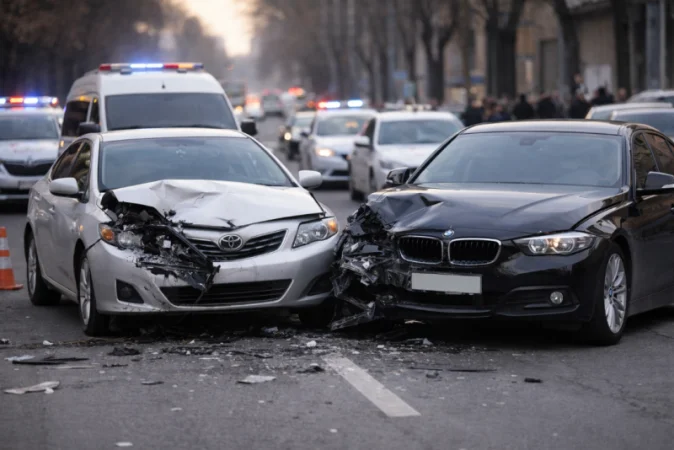
The increase in compensation amounts within the OSAGO system is already included in the tariffs, and therefore, this will not lead to an increase in insurance premiums for drivers. This was stated by Vaghinak Yeghiazaryan, the executive director of the Armenian Bureau of Auto Insurers, during a meeting with journalists.
“The fact that we are raising the compensation amount, which should imply an increase in the insurance premium, will not increase due to this reason. However, there could be changes in tariffs for other reasons. For instance, 6-7 months later, due to inflation or an increase in the frequency of accidents, the tariffs may be revised, as they are liberal; they can rise or even decrease,” he said.
Addressing the issue of reducing the frequency of car accidents, Yeghiazaryan mentioned that there are three main areas to focus on. “This includes improving the condition of road infrastructure, enhancing drivers' behavior, and improving the condition of vehicles. We have specific plans in all three areas. However, since it does not depend solely on us, we have to work with certain state bodies, as well as with NGOs and journalists.”
He pointed out that the state of road infrastructure impacts accidents; for example, there could be a pothole in a certain location, or a traffic sign might not be clearly visible, or two signs might be positioned on both sides of the road, both considered priority or yielding, etc.
“We are now preparing to create a map of accidents throughout Armenia, which will operate in online mode. Based on it, we can identify so-called black spots, where many accidents occur, analyze and understand the causes, and take actions based on that. But this requires complex work, including cooperation with the Ministry of Internal Affairs and the Ministry of Territorial Administration and Infrastructures,” he stated.
According to Vaghinak Yeghiazaryan, in addition to this, measures are also planned to influence drivers' behavior. “For example, we are currently calculating how to take their violation history into account within this bonus-malus system to prevent violations. For instance, if they commit many violations, their tariff may increase, and it will decrease if they commit few, in order to influence their behavior. We have also suggested that certain courses should be organized, with exams to pass, after which the malus could be waived, meaning the tariff would decrease, and points could be returned to them.”
Նմանատիպ հոդվածներ
Armenia to Provide Up to 250,000 AMD Compensation to Citizens Affected by Canceled Flights, Says Mirzoyan
The Ministry of Foreign Affairs of Armenia has initiated a program to assist citizens whose return or transit flights we...
Cyclone Penetrates Armenia: Snow and Precipitation Expected
Due to the penetration of a cyclone from the Mediterranean Sea region, precipitation is expected in most regions startin...
Snow and Mixed Rain: Weather in Armenia
On March 9 and 13, isolated areas of the Republic are expected to experience precipitation in the form of snow in the mo...
Russian Ruble Appreciates: Exchange Rates as of March 15
Rate.am has presented the currency exchange rates as of March 15. The average buying price of the US dollar is 374.82 AM...
Ավելին Society բաժնից
Changes to the Citizenship Application Process in Armenia: Residency Requirement to be Mandatory
Garegin II and Bishops Will Not Attend Tomorrow's Court Session: Ara Zohrabyan
The Prosecutor General Imposes Disciplinary Sanctions on Two Prosecutors