Garegin II and Bishops Will Not Attend Tomorrow's Court Session: Ara Zohrabyan
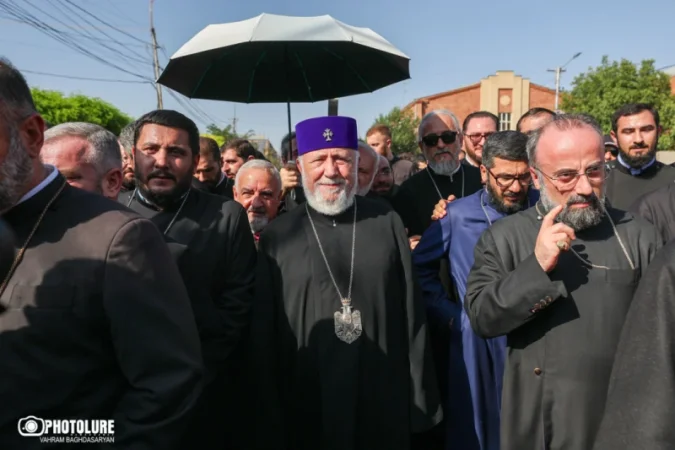
The preliminary hearing of the criminal case involving His Holiness Garegin II, Supreme Patriarch and Catholicos of All Armenians, and six bishops and archbishops of the Supreme Spiritual Council is scheduled for August 28, 2026, at 16:30. It will take place at the court’s location in Vagharshapat (Ejmiatsin, St. Grigor Lusavorich Street 15), presided over by Judge S. Rushanyan, attorney Ara Zohrabyan wrote.
“The Catholicos and the bishops (archbishops) will not be present at this court session in accordance with part 4 of Article 272 of the Criminal Procedure Code of the Republic of Armenia. The defenders will participate in the session.”
Zohrabyan reminded that according to the charges, the Catholicos has declared former Bishop Gevorg Saroyan defrocked, and this defrocking has been characterized by the prosecution as an obstacle to the execution of a court act. Therefore, the first and primary legal question before the court should be whether declaring a bishop defrocked, as an independent spiritual-canonical act, can be recognized as a criminally punishable “obstacle”.
The Constitution and laws of Armenia establish not only a requirement for general neutrality for the state but also a direct obligation not to interfere in the internal governance and canonical life of the Armenian Apostolic Church. The ordination of a bishop, the preservation of their spiritual status, disciplinary responsibility, and defrocking are all key elements of that internal life.
The state does not ordain bishops. The state does not grant episcopal rank. The state does not determine the behavior of a cleric in accordance with the Church’s canons. Consequently, the state cannot decide that a specific individual, regardless of the decision of the Church's highest canonical authority, should continue to be considered a bishop or not.
When the state associates the power to declare a bishop defrocked with the obstruction of a secular judicial act, it reserves to itself the authority to make the final decision regarding the spiritual status. This means it interferes and makes the content of spiritual administration a subject of discussion. This is a direct example of prohibited interference. The degree of intervention in this case is even higher since the threat of criminal liability is being applied,” the attorney wrote.
Նմանատիպ հոդվածներ

Contract Soldier Found Hanging at Ministry of Defense Barracks
According to exclusive information from ArmLur.am, a contract soldier from the Ministry of Defense's N barracks was foun...

The Deceased Was Not on Duty at the Time, Death Unrelated to Service: Ministry of Defense
The Ministry of Defense has responded to circulating reports regarding the death of a contracted serviceman, emphasizing...

Contract Soldier Dies, Ministry of Defense Confirms
A 37-year-old soldier has died in Sisian, with the Ministry of Defense providing details to Aurora News. In a conversati...

122 Packages of Drugs Discovered; 27-Year-Old Arrested
Officers from the Criminal Police of the Aragatsotn Regional Department received operational information that a 27-year-...
Ավելին Politics բաժնից

State of Emergency in the U.S.: Trump
Baku Calls Pashinyan 'Capitulator', No Response from the CPP: Tigran Abrahamyan

CIA Director Warns Russia During Moscow Visit: Possible Purpose of the Visit Revealed