The Universe Will Disappear Faster: New Calculations Shorten Collapse Timelines
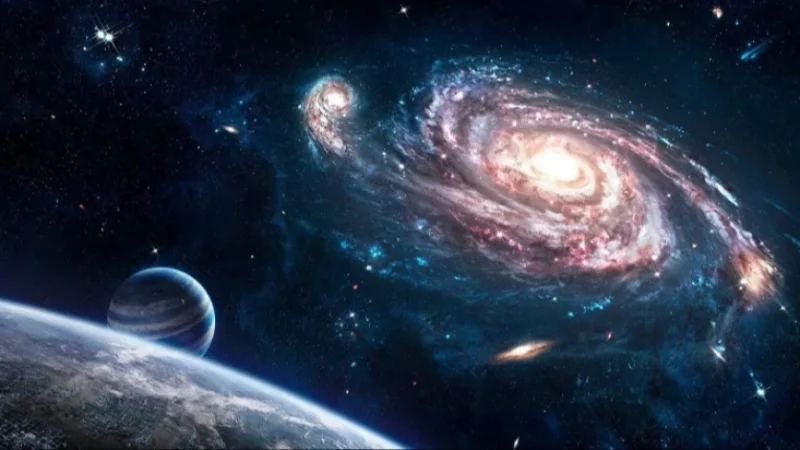
Dutch physicists have revised the timelines for the disappearance of cosmic objects, showing that the Universe could empty out much faster than previously thought, as detailed on Newsweekly.by.
Factors accelerating cosmic decay include:
The study is based on a synthesis of quantum mechanics, relativity, astrophysics, and multidimensional mathematical modeling. The key element was a modification of Hawking radiation theory (1975), which described mass loss through black holes via quantum gravitational processes. The scientists discovered that similar destruction mechanisms apply to all superdense forms of matter, including dead stars and their cores.
For the analysis, ten classes of isolated systems were modeled, taking into account purely radiative effects. Previous estimates only considered black hole evaporation while overlooking other objects. The new research accounted for quantum effects across all stellar remnants, including neutron stars.
The new study from the Netherlands indicates that the Universe could empty itself in 1078 years, due to accelerated collapse of black holes and neutron stars influenced by Hawking radiation. This is faster than earlier estimates but still unimaginably far off. The work highlights how quantum processes shape the fate of the Universe and compel us to contemplate the finitude of everything.
Նմանատիպ հոդվածներ

The Ruble Has Increased in Value: Exchange Rate Today
As of May 11, the exchange rates presented by Rate.am are as follows:The maximum purchase price of the US dollar has bee...

Exam Dates for Schoolchildren Announced
The Minister of Education, Science, Culture, and Sport of Armenia has approved the dates for the organization and conduc...

Power Outages in Certain Areas of Yerevan Due to High-Voltage System Issues
The electric networks of Armenia report that as of 5:15 PM today, some areas of Yerevan served by the company have exper...
China Successfully Launches Experimental Satellite
China has successfully launched the "Shiyan-19" experimental satellite into Earth orbit, which will be used for testing...
Ավելին Society բաժնից

Giant Dead Tree Uprooted on Alek Manukyan Street Falls on Car

Lost iPhone Can Be Found Without Locator: New Tool Developed

Mass Power Outages in Georgia