PM Returns Yellow Card Received at ARF Rally with 'Black' Response
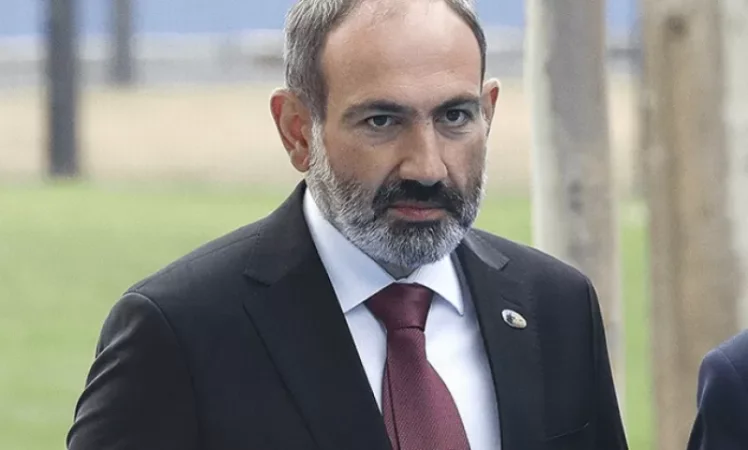
The newspaper "Zhamanak" reports that Prime Minister Pashinyan returned the yellow card he received at the ARF rally a few weeks ago with a 'black' response, effectively preventing the ARF's intention to turn the yellow into a red card. Moreover, this possibility, or rather the occasion, was provided to the Prime Minister by the ARF itself through a recent well-known action in which the party reacted to an incident of violence against an opposition activist.
Representatives of the ARF went to the police, declaring that they had beaten the activist for posting negative remarks about national values and Artsakh on social media.
It is unequivocal that there is a deep-seated issue in this regard, and the ARF's reaction and action should be viewed within that broad, comprehensive framework, as irresponsible and unregulated rhetorical activism in social media poses a significant problem for the “life” and health of society, just as much as violence or the promotion of violence does. However, we will address these cultural and public organic aspects of the problem on another occasion. In this case, the political aspect of what happened provided an opportunity for Prime Minister Pashinyan to deliver a strong statement, although he also addressed the necessity of denouncing violence in general, unambiguously, regardless of whether it is from the government or opposition camps.
Returning to the political aspect, the ARF's action practically gave Pashinyan the occasion to declare about hybrid warfare and formulate a political message to combat it, just as the court's decision regarding Robert Kocharyan served as a catalyst for his speech and process on May 20.
Essentially, the ARF offered a yellow card-blank to Prime Minister Pashinyan in place of the yellow card, a yellow card-blank against hybrid warfare. Its 'black' return is certainly one of the components in the process of forming new political realities in Armenia, evidenced by Pashinyan's statement that the government has no problem in curtailing forces engaged in political activity and even sharp criticism; the issue, as it were, is blocking the application of hybrid mechanisms that destabilize the situation. The subtext here is quite profound and relates to the issue of Armenia's sovereignty.
The point is that shaping political immunity in the issue of sovereignty is a strategic problem for Armenia. To solve this problem, it is necessary to keep these hybrid technologies and mindsets, which have been embedded and generated in Armenian politics under the objective and subjective conditions of the existence of the previous regime, to a minimum. The fact is that these hybrid approaches create a fertile ground for external intervention. Ultimately, one of the guarantees of the success of the Velvet Revolution was that Pashinyan initiated a process that fundamentally excluded or brought to the lowest level the logic and component of that 'hybrid'. It is no coincidence that the so-called counter-revolutionary wave places emphasis on restoring hybridity in Armenian internal affairs.
For more details, see today's issue of the newspaper.
Նմանատիպ հոդվածներ
Makunts on Zeynalyan's Resignation
“Honestly, I do not know what the reasons for Mr. Zeynalyan's resignation are. I must reiterate that for getting explana...
Special Investigative Service Does Not Open Criminal Case Against Arsen and Levon Julfalakyan
The Special Investigative Service has rejected the opening of a criminal case related to the incident involving Arsen an...

State Revenue Committee on Vehicle Importation
The State Revenue Committee of Armenia, responding to recent complaints from citizens, officially announces that any doc...
Turkey Deploys Troops to Nakhichevan: Alarm from Turkologist and Response from Defense Ministry
Turkologist Karen Hovhannisyan has stated on his Facebook page: "Under the guise of 'Unbreakable Brotherhood - 2019' tac...
Ավելին Politics բաժնից
Zelensky Requests Assistance from Finland: Discussion on Strengthening Ukraine's Air Defense
Armen Mamajanyan Appointed as Advisor to Hayk Konjoryan
Discussion on Government's 2026-2031 Program Under Pashinyan's Leadership